Merge Blast 2248
Colors GalaxyCasual
4.2573.00 Reviews
- Version
- 1.0.2
- Installs
- 1.00M
- Age Rating
- Everyone 10+
Screenshots
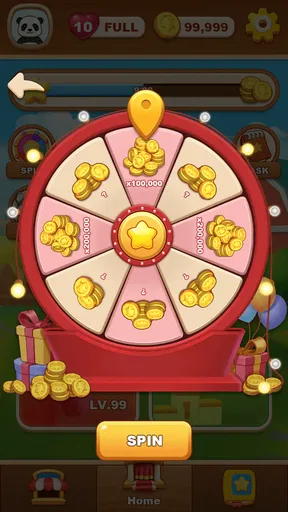
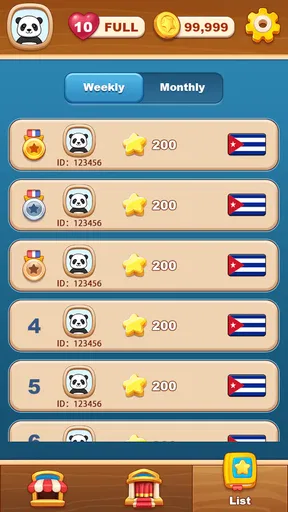
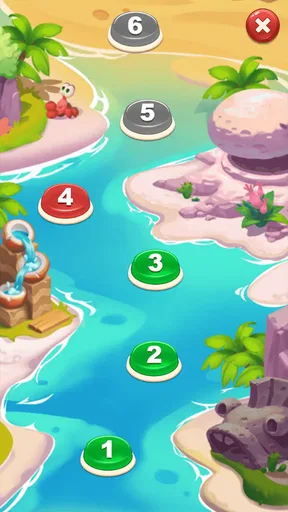
Our Review of Merge Blast 2248
 Analysis by Appyee
Merge Blast 2248 is the kind of casual game I can open for a short break without needing to remember a complicated story, build a character, or learn a large set of rules. Its central idea is number merging: pieces come together, values grow, and each move asks me to think about what the board may look like a few turns later. That sounds simple, but the appeal comes from the tension between an immediately understandable action and the risk of creating a crowded, difficult position.
After spending time with it, I see the game as a good fit for people who enjoy light strategy with a puzzle rhythm. It is free, belongs to the casual game category, and is made by Colors Galaxy. Its average rating is 4.2 from around 4.3 thousand ratings, while the game has passed 1 million installs. Those figures suggest that the basic format has found a broad audience, although popularity alone does not tell me whether it will suit every player.
The most important thing to understand is that this is not a deep strategy title in the style of a long campaign game. It is better viewed as a repeatable mental exercise: make a move, watch the numbers combine, preserve useful space, and try to improve the next run. I would recommend it to someone who wants a quiet puzzle to fill small gaps in the day, but I would not choose it for someone looking for rich narrative, multiplayer competition, or a large collection of game modes.
How clearly the board communicates what to do
I see the board’s clearest strength as the way its numbers turn each choice into a visible planning problem. In this section, I’ll focus on how that clarity helps me get oriented—and why a simple-looking board can still ask for careful attention. That distinction matters when deciding whether the puzzle feels inviting or tiring in practice.
Readable rules, familiar visual logic
The strongest accessibility advantage is the straightforward relationship between numbers and actions. A player does not need to understand a fictional world or memorize a long list of symbols before making a useful move. The number on a tile gives immediate information about its value, and merging creates a visible sense of progress. For me, that makes the first few sessions easy to enter because the game teaches through the board rather than through a heavy explanation.
That clarity also helps when I return after a few days away. I do not have to reconstruct a complicated control scheme. I can look at the current arrangement, identify possible combinations, and begin planning. This matters for casual players who may only play briefly and do not want a game that punishes them for forgetting a detailed system.
At the same time, number-based design can create its own reading demand. The board may be simple, but the player still has to distinguish values quickly and keep track of several possible merges. A person who finds small text, changing positions, or dense tile arrangements tiring may need to play more slowly. I would not describe the game as automatically accessible for every visual ability simply because its rules are uncomplicated.
Navigation that stays out of the way
For everyday use, I prefer a game that lets me reach the actual puzzle quickly. Merge Blast 2248 benefits from having a focused purpose: I am there to make decisions on the board, not manage a large collection of menus. That limited scope reduces the amount of navigation a new player must understand.
The trade-off is that a simple interface leaves less room for personalized organization. Players who expect extensive settings, alternative layouts, or detailed control over the presentation may find the experience more basic than they want. The game’s appeal depends on accepting its direct structure rather than expecting it to function like a fully customizable puzzle suite.
One practical habit helps: before making a quick move, I scan the whole board instead of reacting only to the most obvious matching pair. This is useful for all players, but especially for anyone who needs a little extra time to interpret the arrangement. A slower visual check can prevent a careless move and turns the game from a reflex task into a more comfortable planning exercise.
Why the numbers matter more than decoration
In my experience, the numerical information is the real language of the game. Decorative elements may make the board pleasant to look at, but the decision depends on reading values and spaces. That gives the game a practical advantage over puzzle titles that rely heavily on subtle visual characters or animated objects to communicate progress.
Still, players should not assume that number tiles remove every sensory challenge. If color is used to help separate values, color-dependent distinctions may be less comfortable for someone with color-vision differences. The safest approach is to judge the board during the first session: can you identify the values from the numbers themselves, without depending on color alone? If yes, the game’s core information is likely working well for you. If not, the presentation may become a barrier even though the rules are simple.
Supporting different motor approaches
The game suits me when I want deliberate interaction rather than rapid tapping. Its strategic character means that careful decisions are more important than constant speed. That can make it friendlier for players who prefer a measured pace or who find fast arcade controls uncomfortable.
However, a number-merging board still requires accurate interaction. A player may need to select, place, or move pieces in a confined area, and mistakes can be costly when the board is already crowded. Someone with limited fine-motor control may find precision more demanding than the calm pace initially suggests. The game is therefore more forgiving in timing than in accuracy.
My practical advice is to play with both hands available when possible and avoid trying to make moves while walking or carrying something. That sounds obvious, but the game’s short-session nature makes it tempting to play in awkward situations. A stable grip and an unobstructed screen make a meaningful difference when one misplaced action can change the shape of the board.
Where it fits into real life, and where it does not
For me, the game’s short-session appeal depends on the moment as much as the puzzle: a quiet wait can suit it, while a rushed or distracting setting can make the same decisions feel awkward. I’ll look at where that stop-and-start rhythm is genuinely useful, then consider which players may be better served by a different kind of casual game.
A useful companion for short, interrupted sessions
The best everyday scenario for me is a waiting period with no reliable commitment to a long activity. I might open the game while waiting for an appointment, pause when my name is called, and return later without needing to remember a plot or a team strategy. That makes it more practical than a story-driven game when my attention is divided.
It can also work during a quiet break at home. I can play a few moves, put the device down, and come back when I have more time. The number-merging format naturally supports this kind of stop-and-start use because the current board remains the focus. I would still avoid playing during work, study, driving, or any situation where attention needs to remain elsewhere; a puzzle may be casual, but planning a move can absorb more concentration than expected.
For travel, the game’s simple premise is appealing because I do not need to prepare by learning a complicated control system. Yet situational access depends on the environment. Bright outdoor light, glare, a small phone screen, or a noisy setting can make a visually focused puzzle less comfortable. I find it better suited to a seated break than to an unstable commute where precise interaction is difficult.
Who will probably enjoy it
I would point this game toward players who like watching small decisions accumulate into larger results. If you enjoy number puzzles, board organization, or the satisfaction of clearing space through a well-timed combination, the basic loop has a clear attraction. It is also approachable for casual players who do not want a large commitment before they can understand the objective.
It may suit families or mixed-experience groups because the premise is easy to explain. The age rating is Everyone 10+, so it is positioned for a broad audience rather than adults only. Even so, age suitability and individual comfort are not the same thing. A younger player may understand the merging rule quickly while still finding the planning pressure frustrating, and an older player may appreciate the calm pace but need more time to read a crowded board.
I would skip it if my main goal were social play, a competitive ranking experience, or a game with a strong sense of discovery beyond the board. I would also skip it when I want a game that rewards rapid reactions, because the pleasure here comes from choosing well rather than moving quickly. Players who dislike repeating a similar puzzle structure may also lose interest once the initial satisfaction of merging numbers becomes familiar.
How it compares with other casual puzzle choices
Compared with match-style casual games, Merge Blast 2248 feels more focused on numerical planning than on chasing visual chains or clearing themed objects. That makes it a better choice for someone who enjoys calculating space and future combinations. A match game may feel more immediately energetic, while this one gives me more reason to pause before acting.
Compared with classic number-grid alternatives, it offers the same broad appeal of combining values and managing limited room, but the experience should be judged by how comfortable its particular board presentation feels to you. A familiar number puzzle may be preferable if you already know its controls and want a deeply established routine. This title is more attractive when you want a free, current option that keeps the central idea uncomplicated.
It also differs from idle number games, where progress can often continue with little active decision-making. Here, the meaningful part is my choice on the board. That makes it more engaging when I want to think, but less suitable when I only want something running passively in the background.
Three ways to play more comfortably and thoughtfully
First, I treat open space as a resource rather than an empty leftover. It is tempting to merge immediately whenever a pair appears, but an instant combination may place the new value in an awkward location or remove a useful arrangement. I look for the move that keeps several future options available, not just the move that produces the largest immediate number.
Second, I use a deliberate scan pattern. I check the edges, then the center, then the spaces that would become blocked after a merge. This prevents my attention from locking onto one attractive pair while missing a safer move elsewhere. The method is especially helpful for players who process visual information more comfortably in stages.
Third, I separate a “score” mindset from a “practice” mindset. In one session, I may focus on surviving longer and learning how the board develops. In another, I may experiment with a risky merge simply to understand its consequences. This reduces frustration and makes the game more useful for players who need a low-pressure way to learn the visual rhythm.
Remaining barriers and honest limitations
The biggest limitation is that the game’s simplicity does not guarantee broad accessibility. A clean number puzzle can still be difficult for people who rely on larger text, strong contrast, spoken feedback, or alternative input methods. I would not recommend assuming that every player will experience the board in the same way. The right test is personal: install it, inspect whether the values remain clear on your device, and see whether the interaction feels controllable without strain.
Another barrier is cognitive fatigue. The game may be casual, but planning several moves ahead can become mentally tiring when the board fills up. Someone looking for a completely relaxing activity may find the pressure of preserving space less soothing than expected. I enjoy that tension in short doses, but I would stop rather than continue through frustration.
There is also a difference between being free and being frictionless. The game costs nothing to start, which lowers the barrier for trying it, but a player should still consider whether the repeated format matches their attention span and preferences. If I want varied objectives every few minutes, a broader puzzle collection may be a better fit. If I want one clear system to revisit, this focused design makes more sense.
The current version is 1.0.2 and runs on Android 7.0 or later. That gives it a practical place on many older devices, although the experience will still depend on screen size, touch accuracy, and how comfortably the individual player can read the board. I would check those basics during the first session rather than judging suitability from the age rating or install count alone.
My inclusive verdict
Merge Blast 2248 works best when I approach it as a calm, number-led strategy puzzle for short sessions. Its clear premise, free entry, and measured decision-making make it approachable for many casual players, including people who do not enjoy fast arcade controls. The developer, Colors Galaxy, has chosen a format that is easy to understand without making every move meaningless.
My recommendation is more qualified for players with visual, motor, or attention needs. The game’s readable concept is a positive starting point, but the board can still demand accurate touch, sustained number recognition, and careful spatial planning. It supports a slower style of play, yet it should not be treated as automatically accessible simply because it is casual.
For me, the deciding question is whether you enjoy turning limited space into a plan. If that sounds satisfying, I think the game is worth trying, particularly for waiting rooms, quiet breaks, and other moments when I want a small challenge rather than a long commitment. If you need extensive customization, hands-free feedback, rich variety, or social competition, I would choose a different casual game. As a focused free number-merging experience, though, it earns a place on my short list for thoughtful, repeatable breaks.
My bottom line: I recommend it to players who value clear numbers, patient decisions, and flexible short sessions, while encouraging anyone with specific accessibility needs to test the board’s readability and touch demands personally before settling in.
Verdict
Strengths of Merge Blast 2248
- Simple merge mechanics are easy to learn and play casually.
- Short rounds make it suitable for quick gaming sessions.
- Colorful visuals make the numbered tiles easy to recognize.
- Offline play is useful when you have no internet connection.
- Gradual difficulty provides a satisfying sense of progression.
Limitations of Merge Blast 2248
- Repetitive gameplay may become monotonous after extended play.
- Random tile placement can make some rounds feel luck-dependent.
- Limited strategic depth compared with more advanced puzzle games.
- Ads may interrupt play or appear frequently between rounds.
- Progress can feel slow once higher-numbered tiles become difficult to create.
Similar Picks in This Category
View All
My Talking Angela
Outfit7 Limited4.2

My Talking Tom
Outfit7 Limited4.3

Pou
Zakeh4.2

My Talking Tom 2: Pet Game
Outfit7 Limited4.3

Candy Crush Saga
King4.6

Bridge Race
Supersonic Studios LTD4.1
Frequently Asked Questions
What is Merge Blast 2248 and how do you play it?
Merge Blast 2248 is a number-merging puzzle game built around combining matching tiles to create higher values, with 2248-style progression as the main objective. During a round, you place or merge numbered pieces on the board and plan combinations carefully to avoid running out of space. The gameplay is easy to understand, but reaching larger numbers requires strategy, timing, and efficient use of available moves.
Is Merge Blast 2248 free to download and play?
The game can generally be downloaded and played without an upfront purchase, making it accessible to casual players. However, free puzzle games may include advertising, optional in-app purchases, or both. These extras can provide convenience, remove advertisements, or offer additional resources, but they are not necessarily required to enjoy the core merging experience. Check the store listing for the latest pricing details.
Does Merge Blast 2248 require an internet connection?
Merge Blast 2248 may support offline play for its basic puzzle rounds, which is useful when traveling or when a reliable connection is unavailable. Nevertheless, internet access can still be needed for advertisements, cloud-related features, updates, special events, or restoring purchases. Availability may differ between Android and iOS versions, so it is worth testing the game offline after installation.
Is Merge Blast 2248 suitable for children and casual players?
The simple controls and straightforward number-matching mechanics make Merge Blast 2248 suitable for many casual players, including users who prefer short, relaxing sessions. Even so, parents should review the age rating, advertising content, and in-app purchase settings before allowing children to play. Since difficulty can increase as the board fills, younger players may need help understanding planning and resource management.
What should I know about advertisements and in-app purchases in Merge Blast 2248?
Before downloading Merge Blast 2248, expect that the free version may use advertisements to support the developer. Some ads could appear between rounds or after selecting optional rewards, while purchases may offer boosters, extra moves, ad removal, or other conveniences. You should review the official Google Play or App Store listing for current details and enable purchase restrictions if children use the device.
Play our best games!


